In December 2013, the newest country in the world, South Sudan, entered into a civil war. Over the next decade, the conflict displaced over 2 million people internally and over 2.3 million people have fled to neighbouring countries in search of refuge.
Although a peace treaty was agreed in September 2018, there are still ongoing tensions that make many people fear returning back home to South Sudan 10 years on.
Uganda has opened its doors to those in need. In the same time period, it has taken in over 900,000 refugees from South Sudan, as well as over 500,000 from the DR Congo and 190,000 from other African nations.
They are a nation of people who welcome others.
A fresh start for refugees
Working with the UNHCR, the Ugandan Government has set up settlements across the country to help support Refugees, providing them with a fresh start after they have left behind their country and situation.
“All of my family are dead,” shared Kevin, a 14 year old girl in the Kiryandongo Refugee Settlement. “I’ve suffered a lot. I came here in 2016. I came alone; I’m the only person alive from my family.”
Although Kevin is much safer in the settlement than in South Sudan, life is still hard. She had to work as a gardener for a little money to support herself.
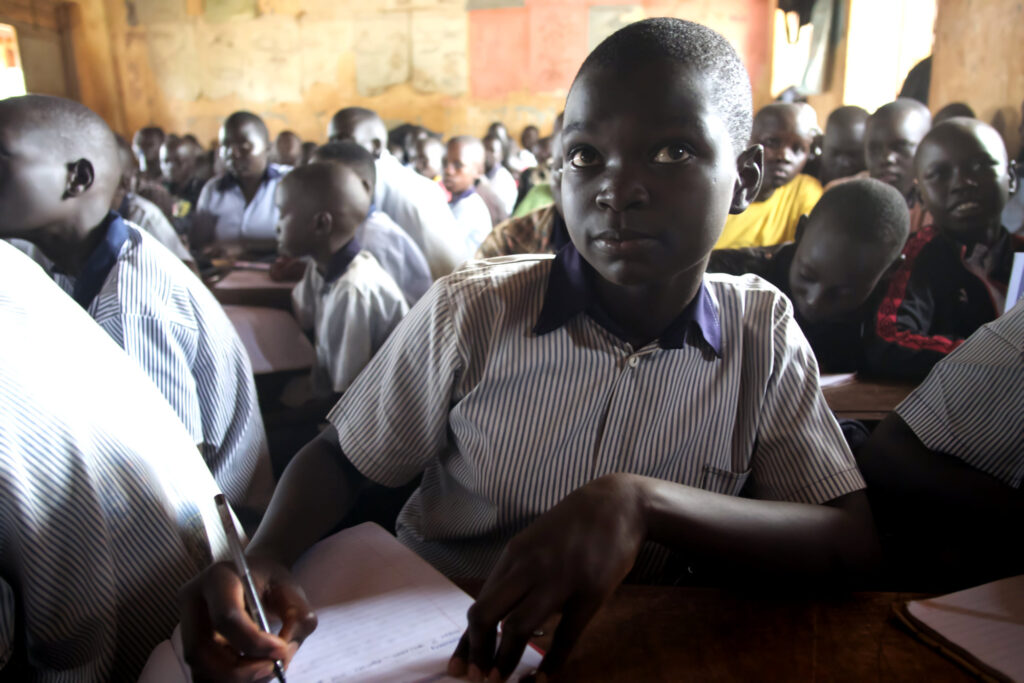
“I don’t have food at home – only at school,” she explained. “It helps with study. If I am hungry, I can not put my head in what the teacher says.”
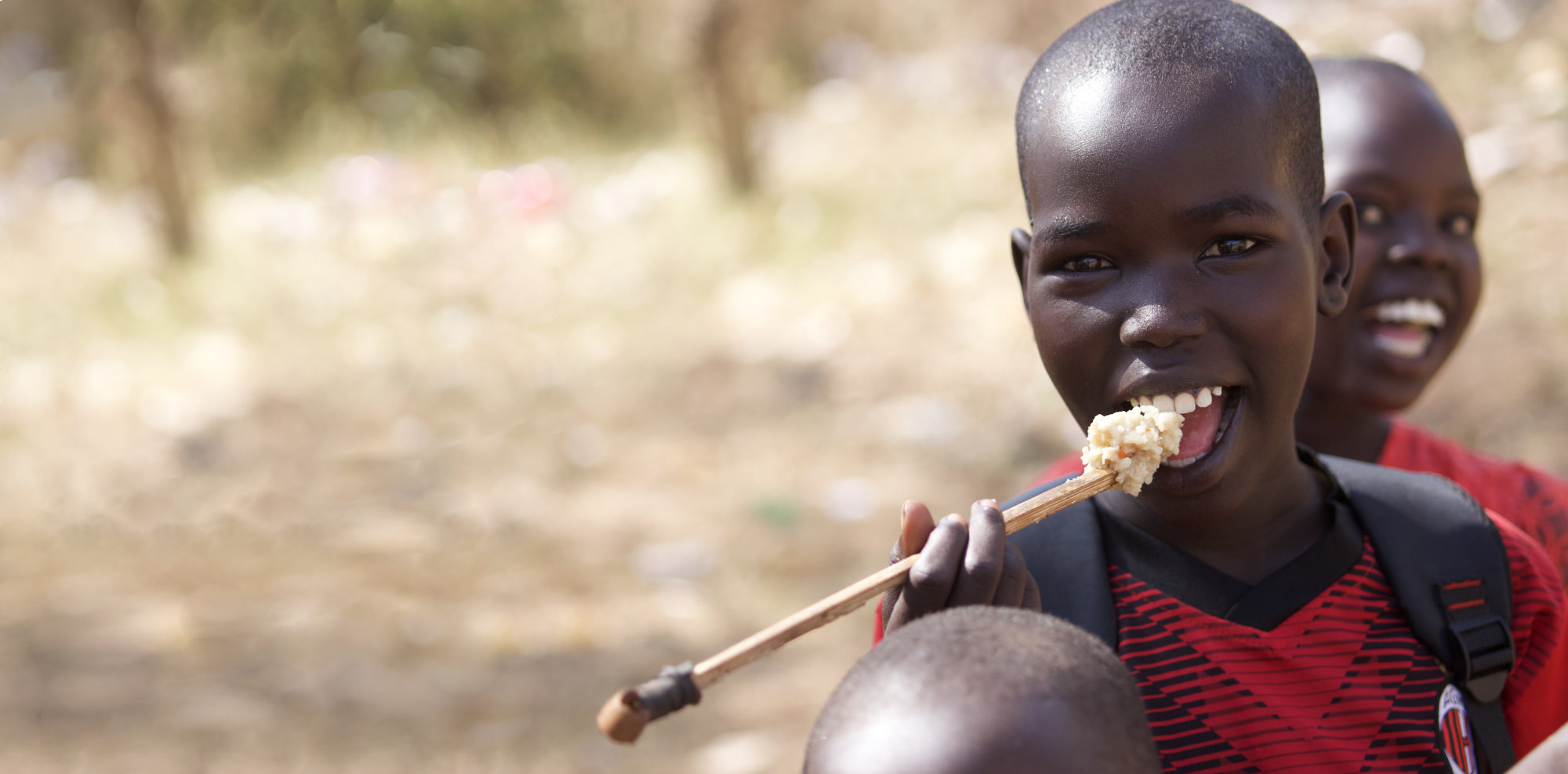
Feed The Hungry works in the Kiryandongo Refugee Settlement to provide food for children through their schools. Across Uganda, over 80,000 young people are being fed by Feed The Hungry East Africa. Many of them are refugees.
“For those who are giving us food, I pray that God will bless them,” said Kevin.
Learning a new life
When someone registers in the settlement as a refugee, they are given some land on which they can build a shelter and cultivate to grow food. They’re also provided with some basic training for living in the settlement.
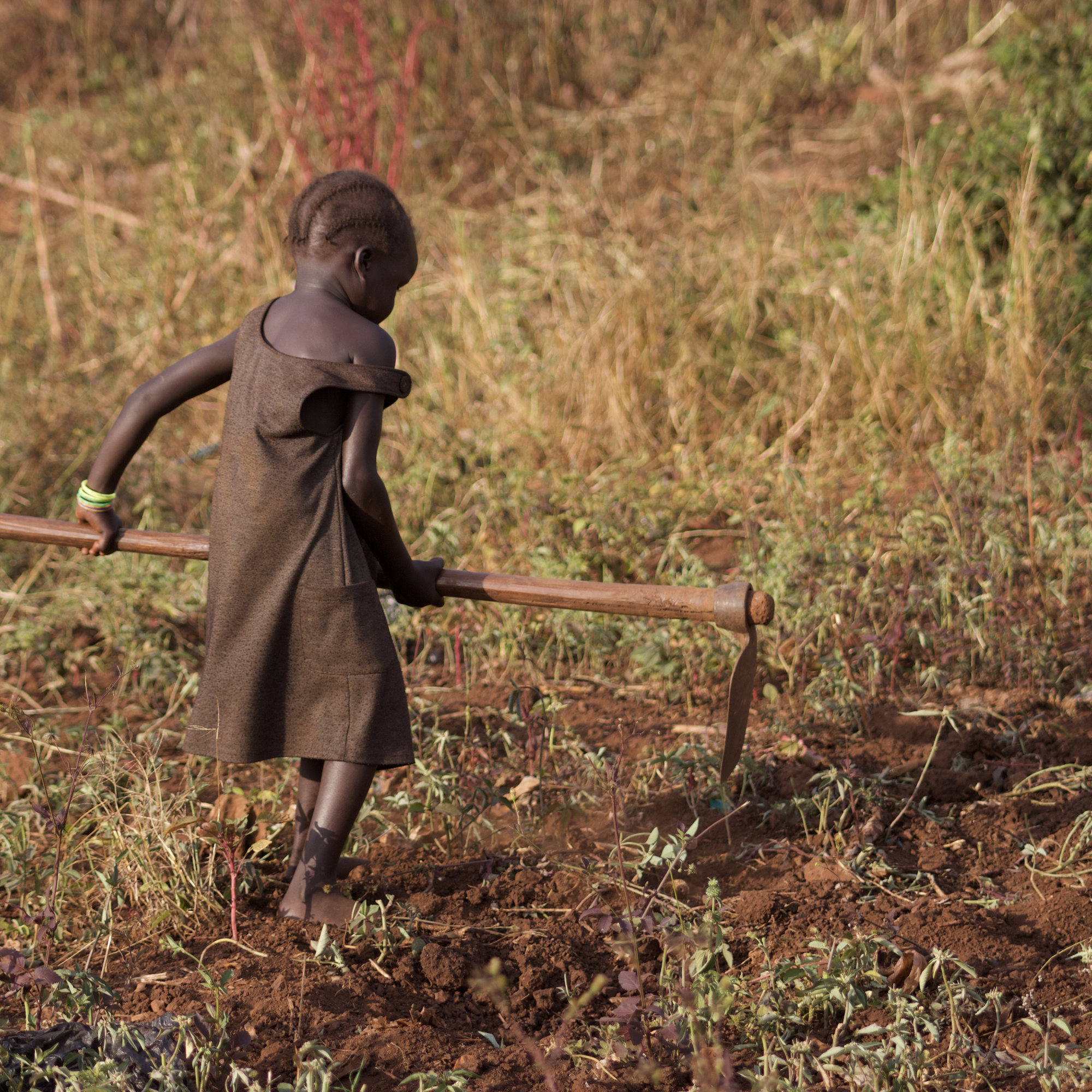 “Some people come to the settlement having come from a desk job in their home country; they are used to using a computer and working with spreadsheets. But because of the conflict, they’ve had to flee, leaving their livelihood behind,” explained Rich Smith from Feed The Hungry UK.
“Just because someone knows how to use a computer doesn’t mean they know how to build a tent or a house, or how to farm. So they receive training when they arrive in the settlement to help them in this new situation.”
Often ‘temporary’ buildings are constructed as homes. Permanent buildings are not permitted but basic houses, often made from sticks, mud or sun-baked bricks are allowed.
Some people start practicing a trade in order to get money, but they are limited by resources. There is little utility infrastructure in the camp; houses don’t have electricity or plumbing. Residents are free to come and go, either to their home country or to look for work elsewhere in Uganda. However, if they leave the plot of land that has been assigned to them, settlement officials can reclaim it and assign it to someone else.
The problem of food security
Kuol is 17 years old and is head of his family. He has 20 siblings. His father is dead and his mother went back to South Sudan.
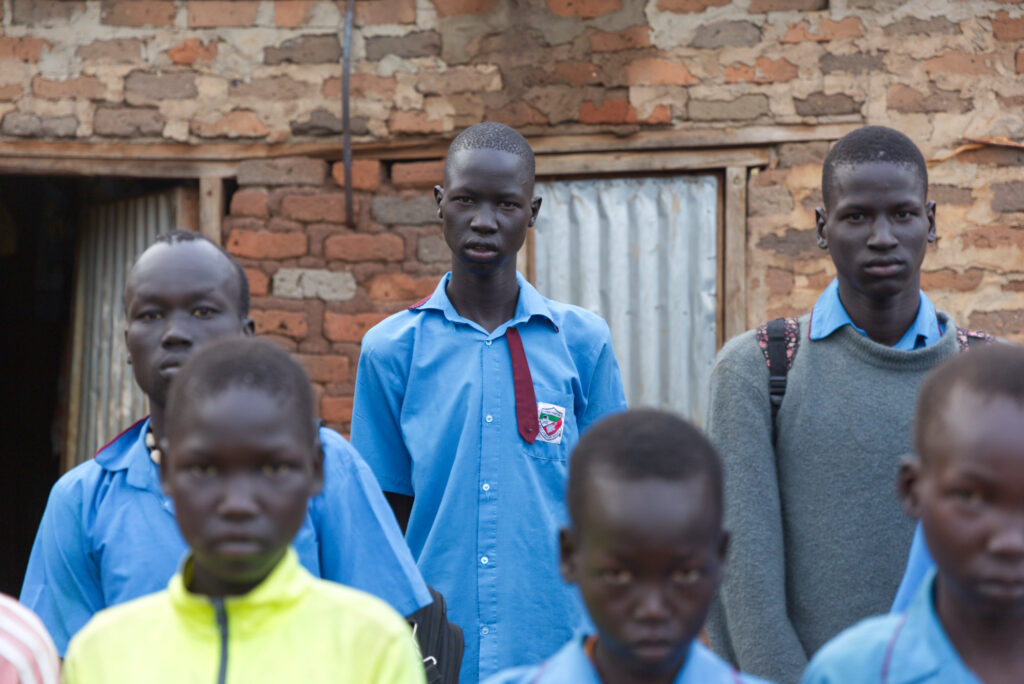
“It’s not like it was in South Sudan,” says Kuol, “because the only challenge that we face here is hunger.”
Kuol and his siblings are reliant on the food that they receive each day through their school in the settlement, Canrom Primary. It helps to alleviate this challenge of hunger a little each day. Without the security of this regular meal, life would be much more difficult for Kuol and his family.
Watch Kuol tell his story.
Become a Life Giver today and help more children like Kuol and his siblings.