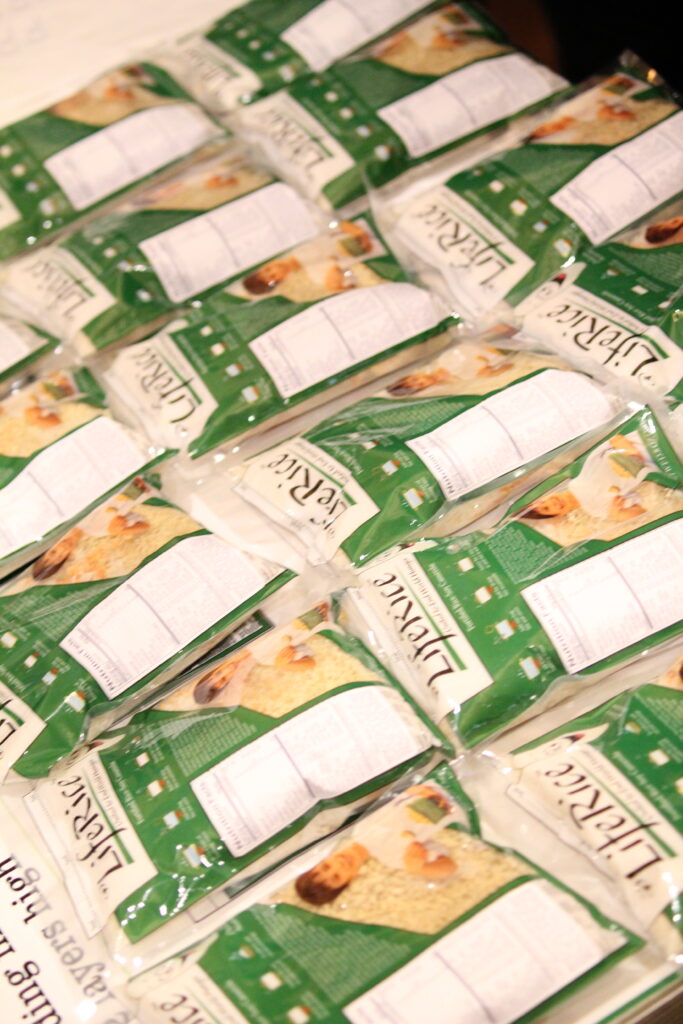
Food packing is a great way to practically do something to tackle world hunger.

What is NOUR:SH food packing?
How does Food Packing work?
NOUR:SH is a community-focused food packing event, encouraging people to do something practical to tackle world hunger.
It’s a great way to engage your business or community group. This is an opportunity to be able to spend over an hour interacting and conversing with your friends, colleagues or new acquaintances, while helping children and young people in some of the poorest countries in the world. And the sense of achievement is palpable!
I’d like to run a food packing event with my business or community group.
How does it work?
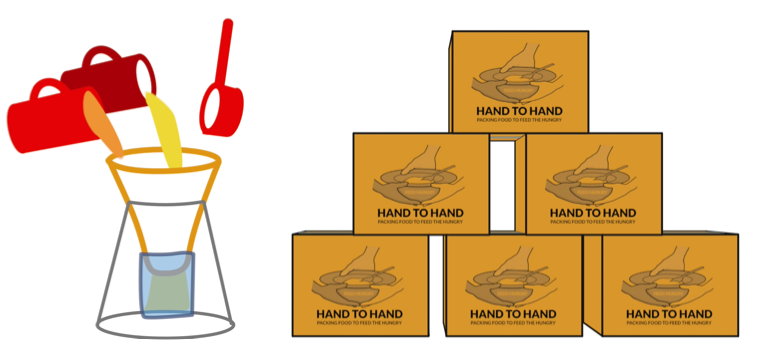
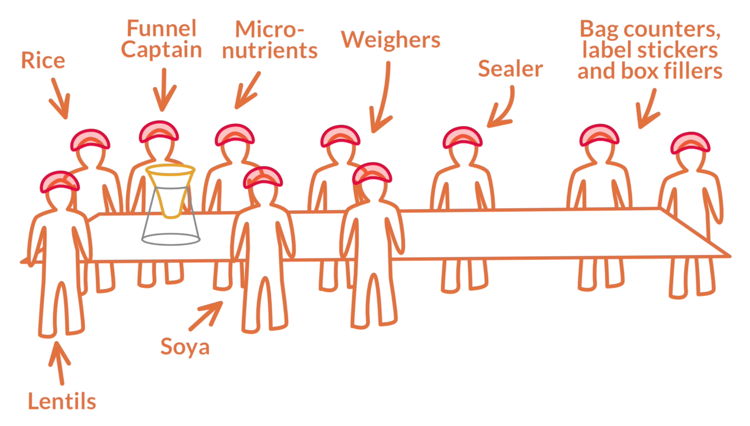
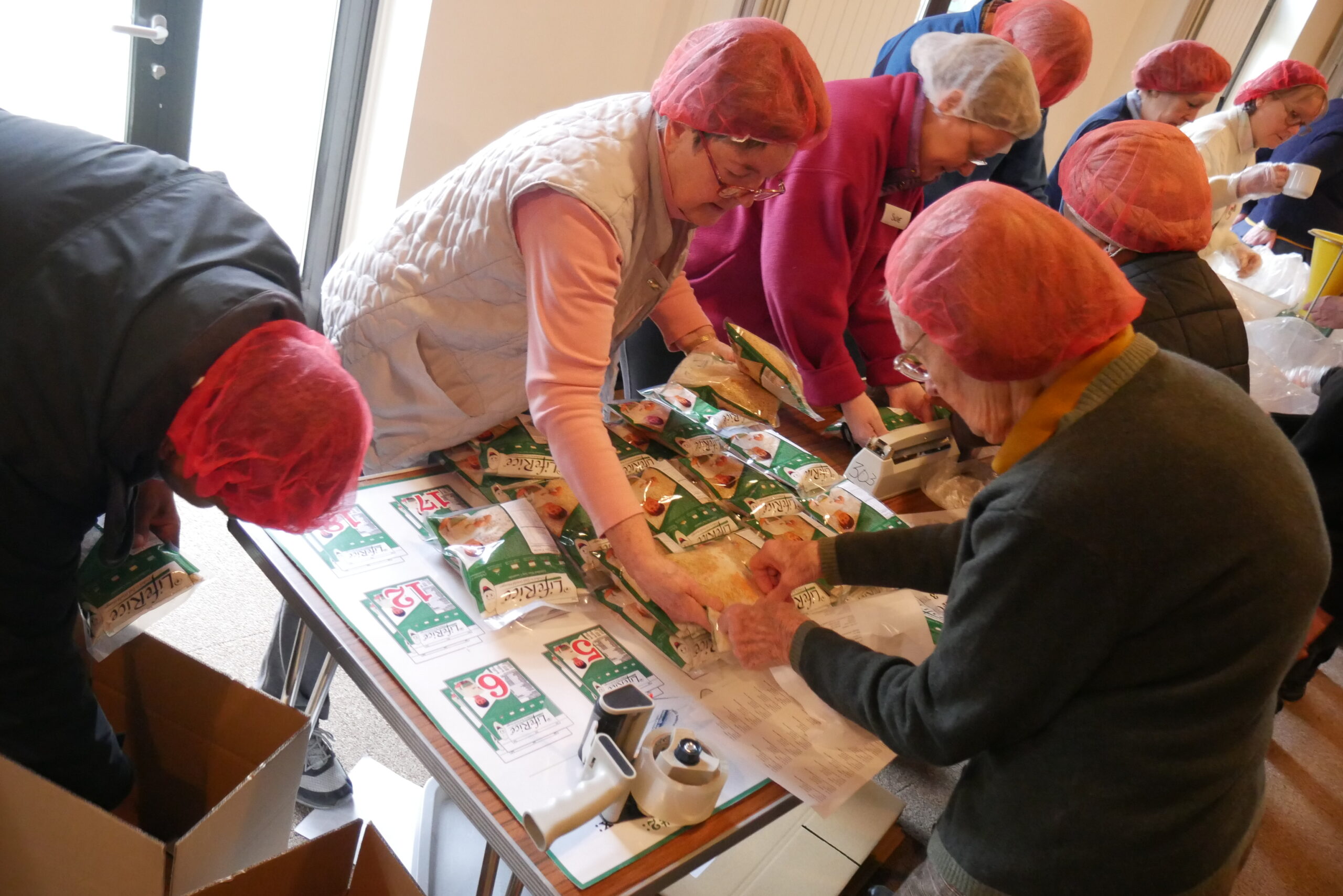
Food packing is very simple. Teams of volunteers work together on a food production line to bag, weigh, seal and box packets of dried food. A team of 60 volunteers could pack 10,000 meals within the space of a couple of hours.
In the United States and elsewhere in Europe, food packing is fairly well known. In 2017, over 300 million meals were packed in the USA and sent overseas. In the UK, food packing is relatively new, although is becoming more common, especially in the corporate sector.
Feed The Hungry takes food packing and makes it relevant for communities. We bring all of the equipment, food and a team of people to run the event at your venue. We’ll work with you each step of the way to help you to organize the event, providing resources to help you fundraise and gather volunteers.
Where does the food go?
The Practicalities
Picking a venue
Food packing can take place almost anywhere. However, there are a few factors you’ll need to consider:
- the size of the venue (is it big enough for all the volunteers and equipment?)
- the access (can we get food and equipment in and out of the venue – are there any stairs or narrow doorways?)
- the amenities (are there electrical sockets and clean water nearby?)
- and the logistics (is there parking nearby and how close to the venue can a van be unloaded and loaded?)
A site visit by one of our team will usually be necessary before the suitability of the venue can be confirmed.

Raising money
There is a cost to running a food packing event: the rice, soya, lentils and micronutrients all have a cost to them, as well as the bags, boxes, labels and transport.
We try to keep the cost of putting on a food packing event to as low as possible. For NOUR:SH events, this starts at 25p per meal packed, which is significantly lower than the industry standard of 35p per meal. For example, a 5000 meal NOUR:SH packing event would cost £1250 for a school, church or community group.
There is a minimum number of meals that need to be packed at a single event, although this varies by location. Please get in touch for details and specific costs.
Finding volunteers
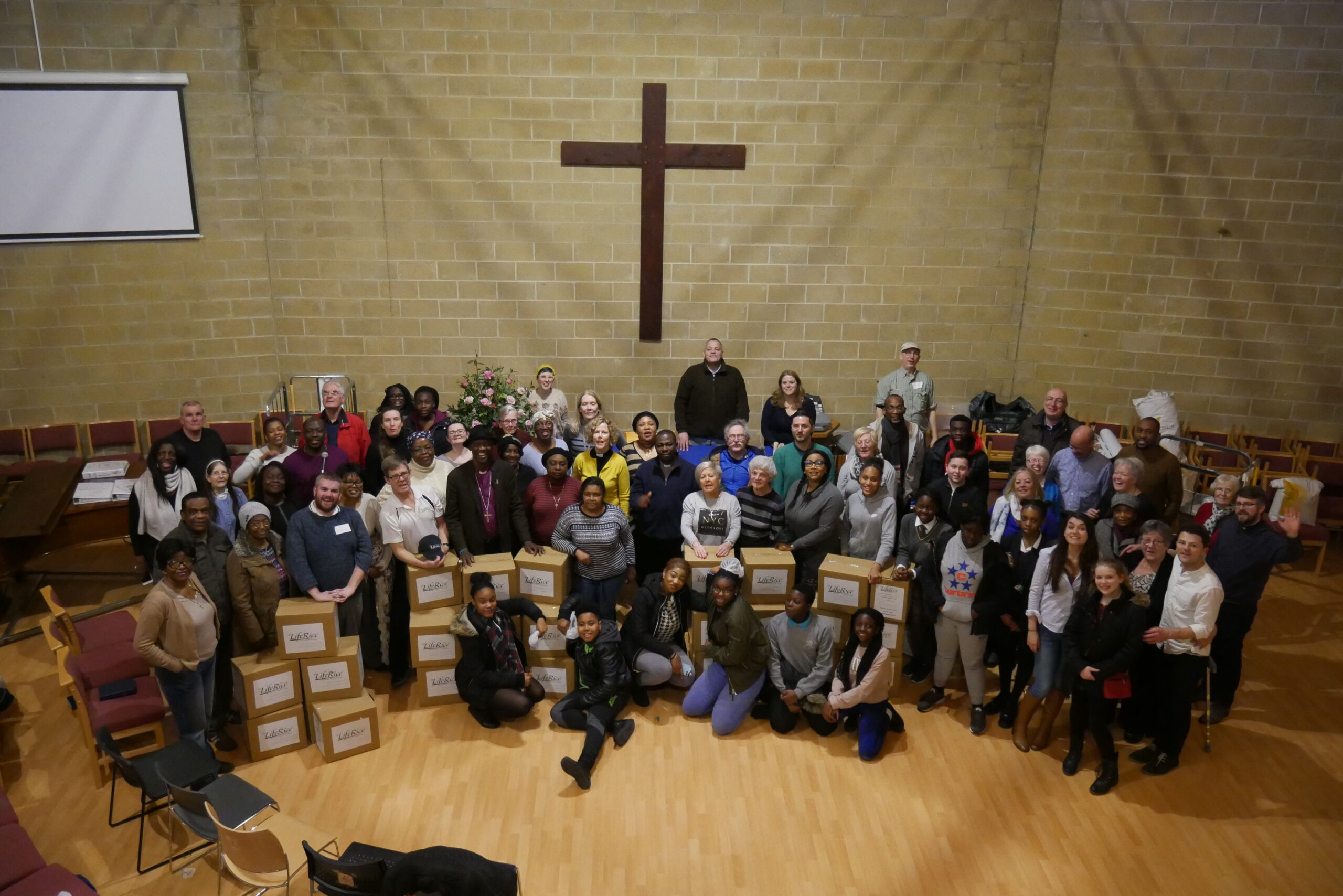
In order for a food packing event to go ahead, there’ll need to be a team of willing volunteers. The number of volunteers needed will depend on the number of meals to be packed.
As a rough guideline…
- 5000 meals will require about 20 to 30 volunteers
- 10000 meals will require about 40 to 50 volunteers
- 20000 meals will require about 70 to 80 volunteers
We’ll work with you to determine a practical target, accounting for the size of the venue and number of volunteers who might like to take part.
Find out more about NOUR:SH food packing and how it could work for your community. Our NOUR:SH team can answer your questions and guide you through the preparations to run a successful community event.