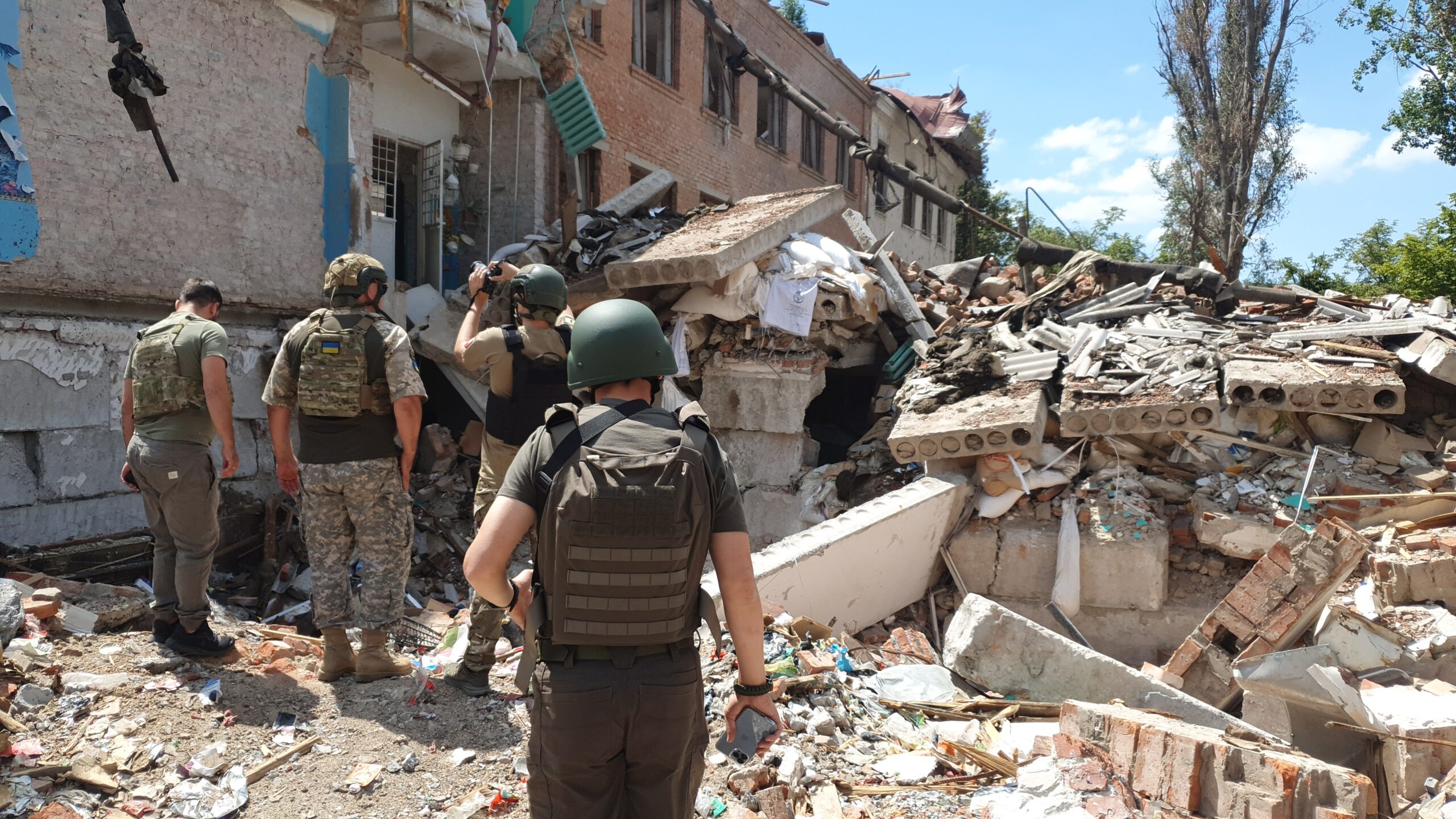
Since the start of the war in Ukraine, Feed The Hungry International have been responsible for sending over 180 lorries of food and aid into Ukraine, amounting to over 4,500 pallets; that is around 3000 tonnes of aid. While we get photos and videos sent to us of the resources being distributed, I had a burning in my soul to see it for myself; to minister to the people of Ukraine living in a war zone.
In July, I had that opportunity when I was invited by Pastor Yan Hrosu to come and see the impact that these resources were having. I’d be journeying with an Army Chaplaincy Team, who were sharing hope and giving support to the people of Ukraine, as well as to those fighting for the country’s freedom. For me, it was important to meet people who were at the sharp end of the chain, who are receiving the food we send.
Journey into a war zone
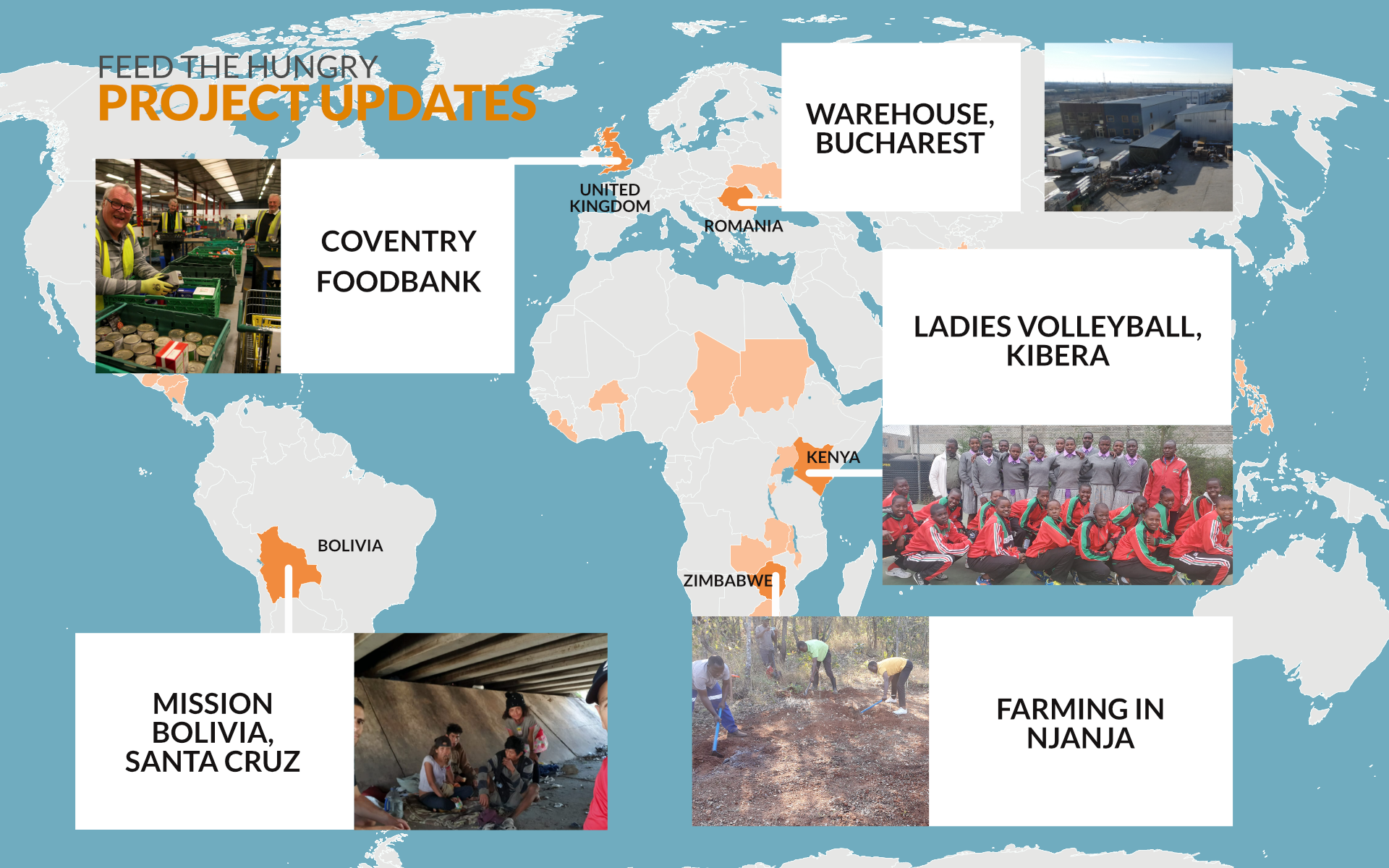
The trip began in Bucharest, Romania, where our partner Bread of Life operates a warehouse. This has acted as a strategic location for the storage of aid, from which it can then be redistributed. Five vehicles were being prepared, carrying about 25 tonnes of resources to be taken into Ukraine. Volunteers came to help move trays and bags of food in preparation for the long and risky journey ahead.
The convoy set off in the middle of the night in order to get to Reni for a 6am ferry crossing into Ukraine. The port there is still operational and allows the free-flow of people and goods between Romania and Ukraine. Arriving in Ukraine in the early morning, we met with Pastor Yan, who runs a Church in a basement. The war has forced changes in the way Sunday worship takes place; I found on my journey that underground was often the safest place to be.
Our journey continued up to Izmail, where we’d be meeting the Chaplaincy Team, led by Pastor Gennadiy Mokhnenko. Pastor Gennadiy is a church leader in Ukraine and has been featured in documentaries about serving and ministering to those on the frontline. Upon arrival, we shared in a time of worship and testimony with members of the Chaplaincy Team.
Worship in the midst of war
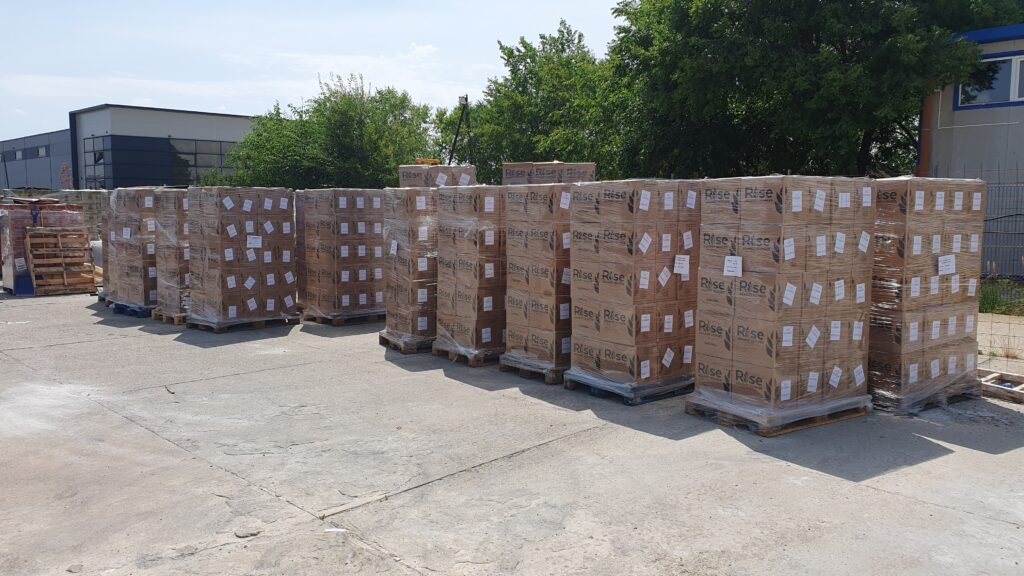
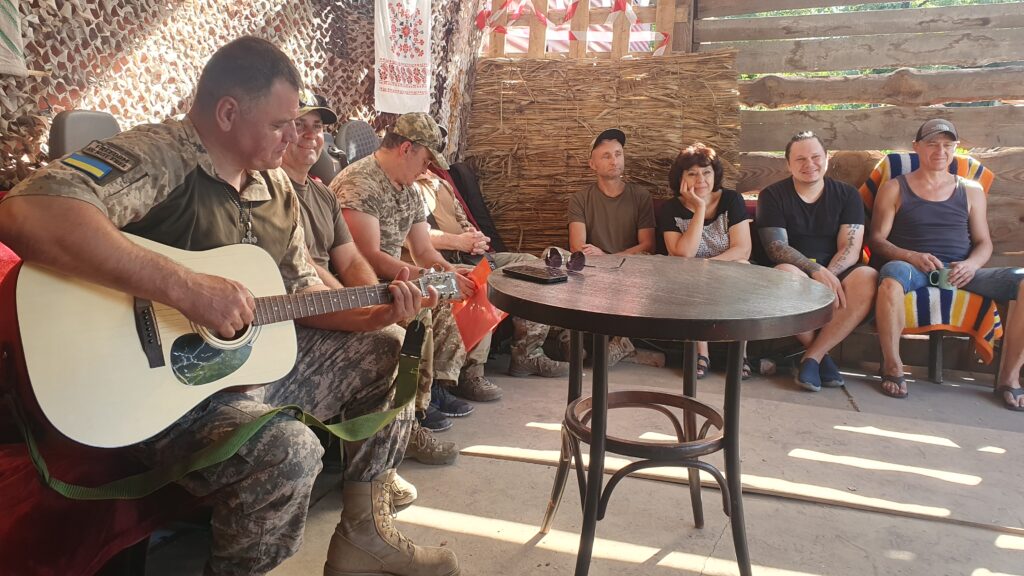
We sat down in a makeshift hut of sorts with chairs made of pallets, next to a hotchpotch of vehicles including a Dentist on wheels, supply trucks and a mobile kitchen, all liveried with Red Crosses. Around 30 men and women gathered for a time of worship, sharing their stories of people they had met, circumstances they had faced and heartache over tragedies they had come across. It was heartbreaking and humbling to hear.
Two trucks were prepared for visits to three areas in the ‘Red Zone’; taking provisions to those cut off by the conflict and in locations which could quickly become the frontline of the fight.
As we moved out of Izmail, we went from experiencing heavy traffic to seeing fewer cars and greater numbers of green and camouflaged vehicles. We passed through checkpoints until there was barely anything or anyone except for light armoured vehicles protecting key junctions of our route. Orders were given; phones switched off, point people declared, action plans described and evacuation procedures noted.
Food to the frontline
Our first drop-off was in a small village which had a number of damaged properties. We brought bags of groceries for the 40 residents still living in the area. We hung around just long enough to pray over the people, who were so grateful and presented us with some fabulous savoury donuts.
Help Ukrainians in the midst of war and others like them facing crises.
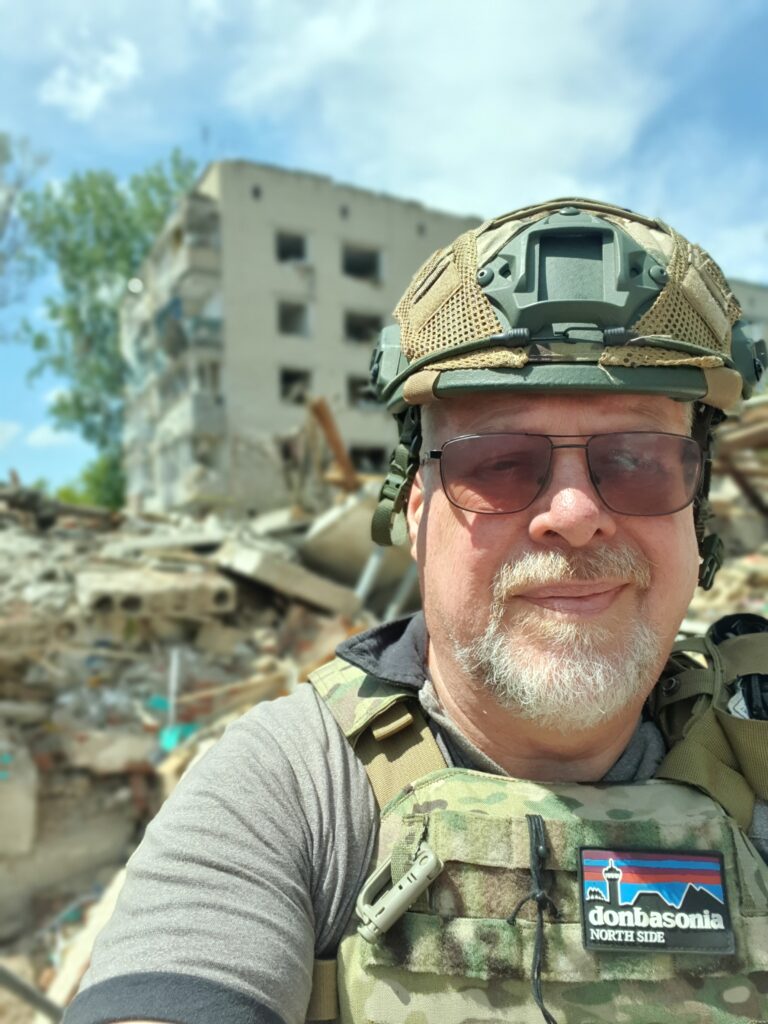
We then darted in and out of backroads of Bakmut to the outskirts of the town, seeing more and more damaged houses and craters until the urban landscape became an apocalyptic scene of devastation.
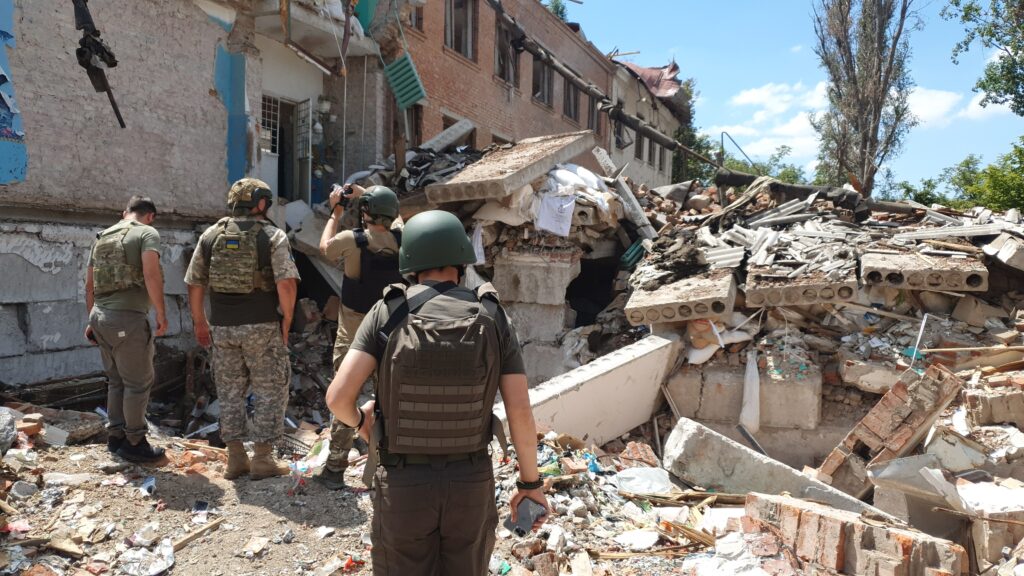
We stopped in front of a block of flats that had every window blasted out and was surrounded with rubble; curtains and furniture hanging out of the gaping holes in the building. I thought the place was deserted and yet out of a narrow cellar door came a smiling woman glad to see us. As we unloaded bags of food, shells began to drop, distant at first and then closer. The order came to bunker down, and so we grabbed the food and descended to the cellar.
The food we send is a lifeline
The cellar consisted of two main rooms, one with 10 beds covered in knitted blankets, and the other a living area. Cooking was done on a two ring gas stove in the corridor to allow the smoke to go out of the cellar door. It was good to see empty food boxes with our labelling around the place; for this lady and the people living in this underground shelter, the food we send is a lifeline.
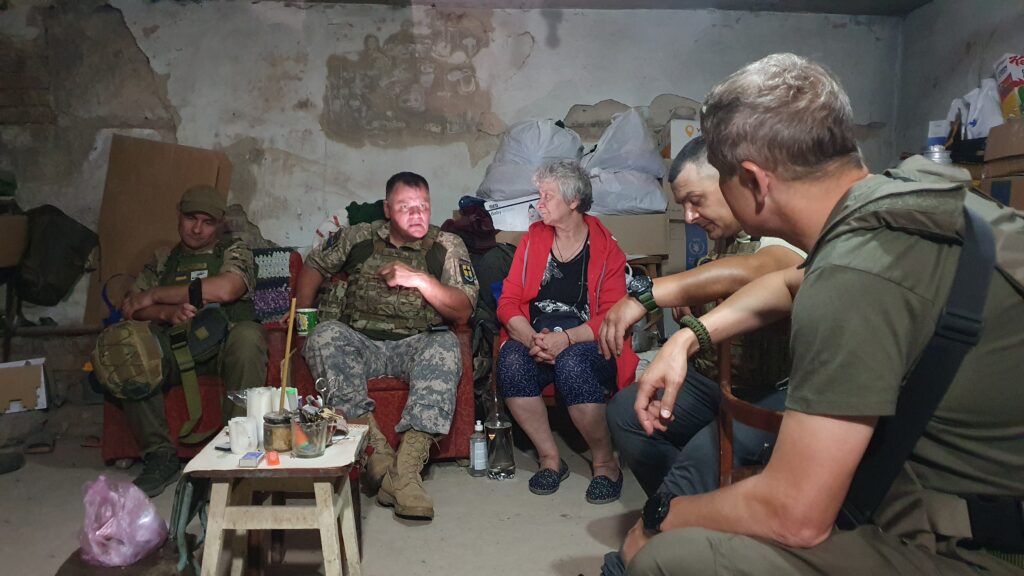
The barrage of shells continued to thump above us. I watched the faces of those around me and saw a twitch in the corner of their eyes as the noise got closer still.
This was the reality of living in a war zone; there was nothing else you could do but pray that the attack would pass by quickly and the building would remain standing.
Eventually, the noise of the shelling ceased, and when the all-clear was given, we proceeded on our way.
Continuing on with life
Pastor Gennadiy then took us to a school, an Orthodox Church and a Community Church that had been bombed. The Community Church had been set up as a social outreach with shower rooms, barbers and creche for children to be safe in. All that remained of them were the ruined shells of the buildings; in an attack on the area, eight people died while serving others. I was invited to pray with the team for the people of the area, for their loss and for their future.
We journeyed back to Zaporizhia. What amazed me was, on the way out, just past the ground zero checkpoint, Combine Harvesters were out in the fields, bringing in the crops. The war was on their doorsteps but for some, there was little else they could do but continue on with life.
Mobile nourishment
In Zaporizhia, we visited a mobile food van, which had been created by our partner, Bread of Life. Hot food was cooked and served to local people; a way of ensuring that everyone had access to nourishment, regardless of their circumstances at home. Some of the food that we’d been sending into Ukraine was being prepared and served here. About 50 people were gathered around the van, many grateful for the soup and bread being given out.
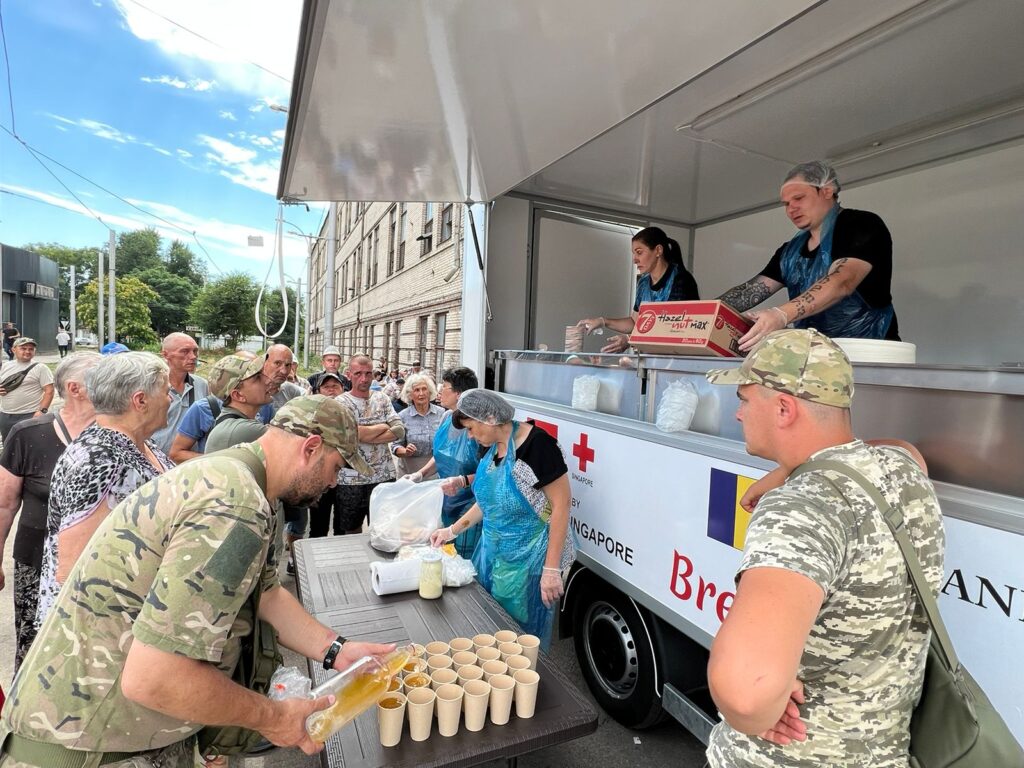
As the evening approached, we continued our journey back to Izmail, weary from the day. The checkpoints become more heavily monitored at night, which slowed the return to base. We got to the hotel at 3am, having been on the road for hours.
Love in desperate places
The following day, I was asked to speak at Pastor Yan’s Church in the cellar. I shared a message of love in desperate places and how God provides, even in the face of harsh challenges and evil.
On the evening of my return back into Romania, the port in Reni was bombed. Seventeen missiles hit, two close to where I was staying. Luckily, the damage was minimal and the port reopened several hours later, allowing me to catch the ferry back to Romania.
Over the few short days that I’d been there, I’d seen broken buildings, decimated towns and war-torn landscapes. And yet I’d also seen hope. Hope that this time will pass and that there will be a brighter future for the people of Ukraine.
Continuing to support Ukraine
From the very beginning of the war, Feed The Hungry has been supporting Ukrainians, both in Ukraine and refugees who have left for safer ground. We are positioned where we can help and where God has continually provided for us, and as His resources come to us, so we will continue to support Ukraine.
Continue to love those in a desperate place. Give to our Disaster Relief Fund to bless Ukrainians in the midst of war.