
Mazabuka, Zambia is a staging town for commercial farming. Farmers gather here to buy seed and equipment that they then take back to their farms.
It’s therefore also a place many people come to in search of work, hoping to be employed on one of the farms or in the farming industry. This has led to a large number of shanty towns around Mazabuka – unofficial houses made from whatever can be gathered, without facilities such as running water, electricity or a sewage system.
In fact, in Zambia as a whole, only 37% of the nation has access to electricity. Droughts, tropical storms, pollution, desertification, a lack of usable water… All these factors threaten Zambian livelihoods and lives.
Zambia was just emerging from a 2-year drought when Covid struck in 2020. This double-whammy drastically undermined food availability, with the poorest families suffering the most from the impacts of the pandemic.
Key Stats
Population:
20.2 million
Life expectancy:
66.6 years
Below poverty line:
54.4%
Children under 5:
11.8% are underweight
Food insecurity:
1.6 million people
Stats from The World Factbook.
Feeding the hungry in Zambia
Hammes Kanondo, our partner in Zambia, has a long-term goal for his ministry: to see the children he reaches lift themselves and their families out of extreme poverty, impact their communities and country, and ultimately go beyond the borders of Zambia, sharing the life-changing Gospel of Christ.
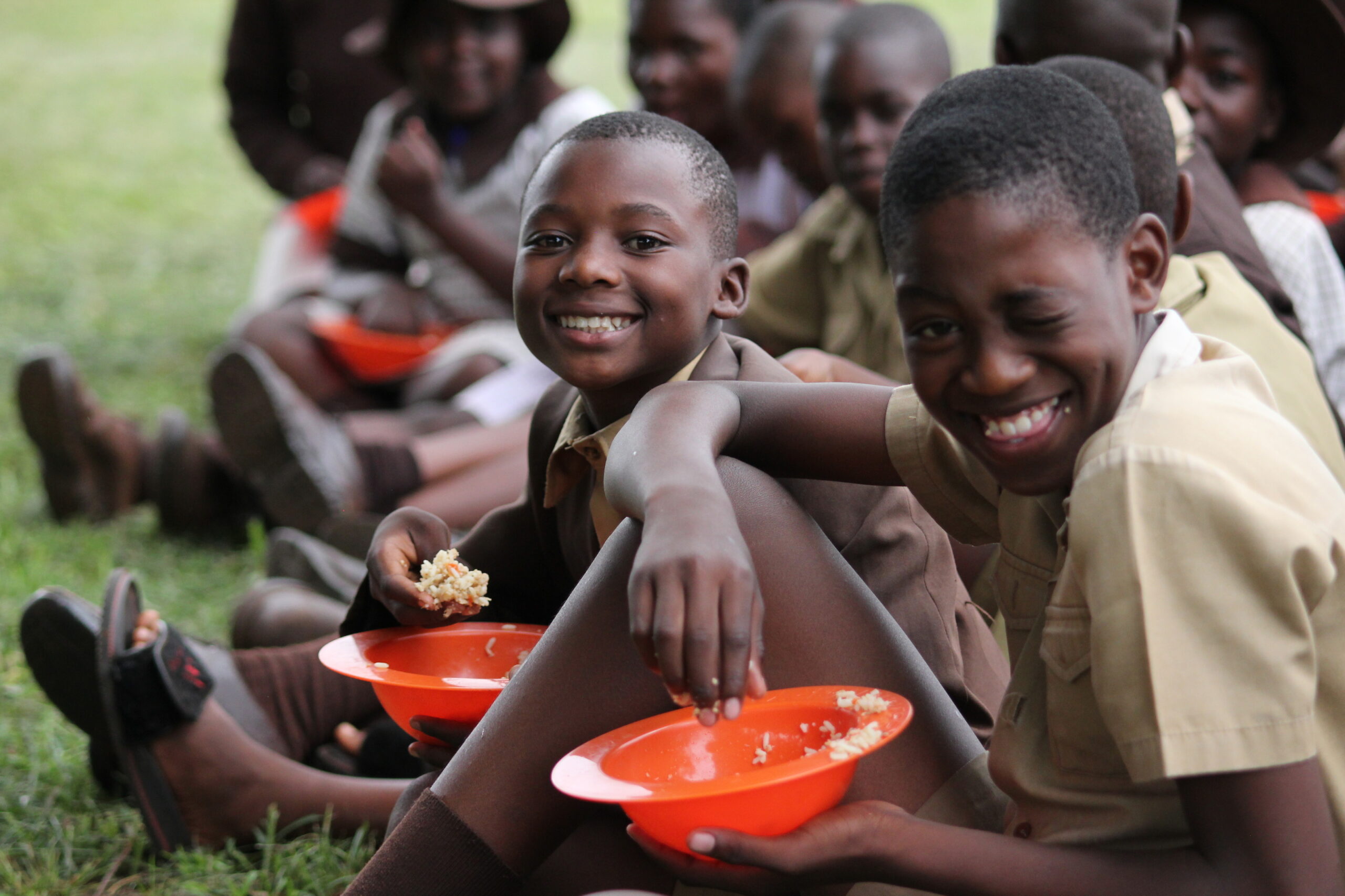
He started by building Lukkomano Community School to educate the street children from the shanty towns around Mazabuka. From 35 children, the school has now expanded to over 400 children. Their first 7th grade exam class is preparing to pass their higher exams in 2023, enabling children to progress to secondary school. Providing regular meals for Lukkomano Community School draws the children in from the streets. It doesn’t just feed them: it also protects them from the high risks of abuse and harm they face daily. And, of course, it keeps them in education.
Reaching the most vulnerable
Feed The Hungry UK recently worked with Hammes to try a new thing: we gave 50 chicks to a group of widows in Mazabuka.
There is a high percentage of widows in Zambia. HIV/AIDS is prevalent across Zambia, particularly among men. The high percentage of widows in these communities are particularly vulnerable. They shoulder not just the care of their children but also the responsibilities of earning a living. Because they are female, they can struggle to find good work and are vulnerable to mistreatment. They also may have contracted HIV/AIDS themselves and struggle with ill health.
It was remarkable to see what a group of widows did with 50 chicks. They nurtured them, bred them and had more chicks. The eggs could be sold, the chickens could be eaten – this little group of chicks became an income stream.

“*Mary led us through the maize fields, striding ahead of me and her fellow widow group. They were all laughing and joking around me. I asked them why they were laughing so much and they responded, ‘Before you gave us food and before you gave us life this lady was bedridden with HIV.’
Without enough nutritional food, Mary’s body was rejecting the HIV medications – the medicine was unable to make her well. Now that she was able to produce more nutritional food, the medication she received was working.
‘Now you can see how energetic she is!’ The provision of a sustainable food source was a simple thing, yet it transformed Mary’s life in a way I had not expected. What a wonderful testimony!”
Gwyn Williams, Feed the Hungry
The Mustard Seed Programme
These widows took this opportunity one step further: they initiated the Mustard Seed Programme. Establishing further groups of widows in other areas, they provided them with 50 chicks, forming for them an income that didn’t exist before.
As this programme has grown, we have helped equip them for sustainable farming, providing training and resources. We continue to reach out in innovative ways, seeing growing food security spread from one community to another.
Support Hammes as he continues to feed street children in Mazabuka and provide impoverished families with a better way of life through simple food security initiatives.